The best korean historical action drama for you depends less on one "top" title and more on the kind of pressure you want: court politics, tragic brotherhood, popular rebellion, colonial resistance, or fast survival horror. If you want a quick first pick, start with Kingdom for speed, Six Flying Dragons for political scale, or My Country: The New Age for emotional sword-fighting.
My Country: The New Age
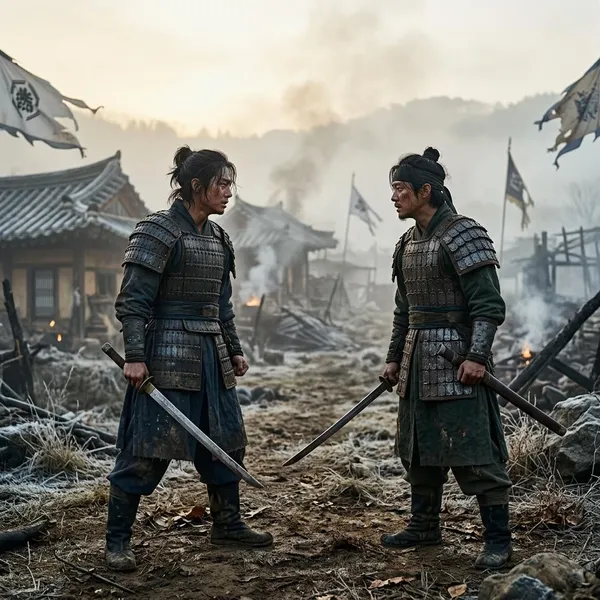
My Country: The New Age is a strong choice if you want sword fights that feel personal rather than decorative. Set during the fall of Goryeo and the rise of Joseon, it turns a major political transition into a story about friendship, class pressure, family duty, and betrayal.
This is the pick I would suggest to someone who wants a serious historical drama but does not want to commit to a very long sageuk. The action arrives with enough force to satisfy genre fans, while the character conflict gives the battles a reason to hurt.
Two friends face a collapsing dynasty
Seo Hwi and Nam Seon-ho begin as two young men tied together by training, hardship, and loyalty. The collapsing dynasty is not just background scenery; it changes what survival means for both of them, especially when family status, military service, and ambition start pulling them in different directions.
If you like historical dramas where big events are filtered through intimate damage, this section of the story works especially well. The fall of an old order feels less like a textbook event and more like something that breaks homes, friendships, and futures.
Opposing loyalties turn them into enemies
The rivalry is painful because neither man becomes an enemy for a simple reason. One is driven by loyalty and loss; the other is shaped by status, resentment, and the need to survive inside a brutal hierarchy. Their clashes carry memory as much as anger, which makes the action feel heavier than a standard revenge plot.
Six Flying Dragons
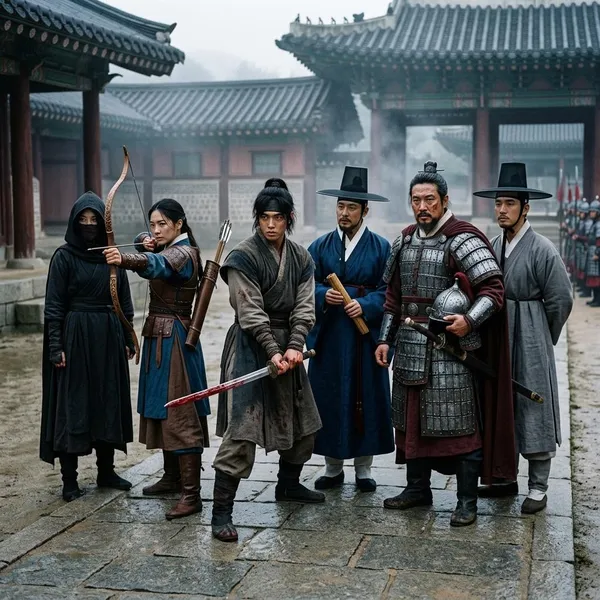
Six Flying Dragons is the strongest pick here for viewers who want political depth with their action. It follows the forces behind the founding of Joseon and gives real weight to reform, ideology, strategy, and the cost of building a new state.
Do not choose this one only because you want constant combat. Choose it if you are comfortable with a longer drama where debates, alliances, betrayals, and power shifts matter as much as swordplay. For viewers who enjoy watching a political movement form and then fracture, it is hard to beat.
Six allies fight to establish Joseon
The drama's strength is its ensemble structure. Instead of treating history as the work of one heroic figure, it follows several people whose skills and beliefs push the creation of Joseon forward.
- Best for: viewers who enjoy long-form political storytelling.
- Less ideal for: anyone who wants a short, action-first weekend binge.
- Main appeal: the feeling that every alliance could reshape the future.
Rival ambitions fracture their shared cause
The most interesting tension comes after momentum builds. Once the old order weakens, the question changes from "Can they win?" to "Who gets to define the new country?" That shift makes former allies more dangerous to each other than obvious villains.
This is where Six Flying Dragons rewards patient viewers. It understands that revolution does not end when power changes hands; sometimes the hardest fight begins when people who once wanted the same future disagree on what that future should become.
Rebel: Thief Who Stole the People
Rebel: Thief Who Stole the People is the better choice if you want historical action from the ground up rather than from the palace down. Its energy comes from exploitation, anger, and the belief that ordinary people can push back when power becomes openly cruel.
The drama reworks the Hong Gil-dong legend into a story of slavery, tyranny, and collective resistance. Compared with the more court-centered titles, it has a warmer underdog spirit and a clearer emotional line: people who have been treated as disposable begin to act together.
A former slave challenges a tyrant
Hong Gil-dong's background matters because his anger is not abstract. He understands humiliation and fear from inside the system, so his challenge to tyranny feels earned rather than heroic by default.
The drama works best when it shows abuse as something supported by hierarchy, not just one villain's bad temper. That gives the rebellion a stronger moral charge: the fight is not only about defeating a ruler, but about proving that people denied dignity still have power.
Ordinary people rally behind his rebellion
The rebellion is not built around one invincible savior. Its emotional payoff comes from watching frightened people slowly trust each other enough to take risks. If you prefer stories where victories feel communal rather than royal, this is the title that most clearly offers that satisfaction.
Mr. Sunshine
Mr. Sunshine is the most cinematic pick on this list, and it suits viewers who want romance, resistance, espionage, and political tragedy in one polished period drama. Its early-1900s setting gives it a different texture from Joseon sword dramas, with firearms, foreign influence, covert operations, and social tension shaping the action.
A returning Marine meets a resistance fighter
Eugene Choi returns to Korea as a U.S. Marine after a life shaped by exile and painful memory. Go Ae-shin, an aristocratic woman involved in the resistance, gives the story its emotional and political center. Their connection works because both characters belong to Korea in complicated ways, and neither can treat love as separate from history.
Love and duty collide amid foreign pressure
Romance in Mr. Sunshine is never safely private. Foreign powers, local collaborators, class barriers, and resistance work all press against the characters' personal wishes.
That makes the drama a better fit for viewers who can handle heartbreak. If you want a clean romantic escape, this may feel too heavy; if you want love tested by loyalty, identity, and national crisis, it is one of the strongest choices.
Song of the Bandits
Song of the Bandits is the rugged, faster-moving option for viewers who want historical action with a frontier feel. Set in 1920s Gando, it trades palace corridors for raids, ambushes, open land, and people trying to protect a fragile home under colonial threat.
This is a good pick when you want resistance without the slower build of a large political epic. It has a rougher rhythm, and its action often feels tied to displacement, hunger, grief, and survival rather than ceremony or court rank.
Outlaws defend their homes in 1920s Gando
The characters are not polished heroes, which is part of the appeal. They are former soldiers, outcasts, survivors, and wounded people trying to hold onto a place that can be taken from them at any moment. Home here is not comfortable; it is something unstable that must be defended again and again.
Colonial forces threaten their fragile refuge
The danger is both physical and cultural. Colonial pressure threatens families, land, memory, and any chance of building a stable community.
- Watch this for: urgent action, outlaw atmosphere, and anti-colonial stakes.
- Skip it for now if: you prefer detailed court strategy over raids and stand-offs.
- Best viewing mood: when you want something shorter and more kinetic than a traditional sageuk.
Kingdom
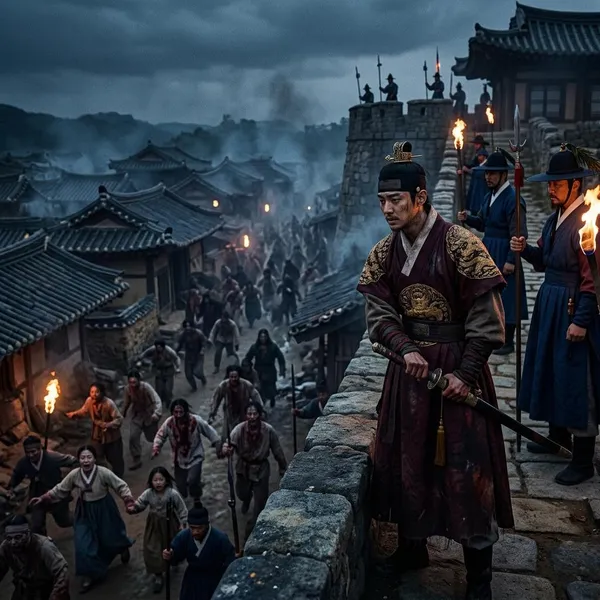
Kingdom is the easiest recommendation for viewers who want speed. It mixes Joseon politics with zombie survival, so the story gives you court intrigue, famine, corruption, and horror without asking for a long first-season commitment.
It is also a smart entry point if you are unsure about historical K-dramas. The survival plot is immediate, the episodes move quickly, and the political conflict is clear enough to follow even if you are not familiar with sageuk conventions.
A prince battles a spreading zombie plague
Crown Prince Lee Chang is not just fighting monsters; he is trying to understand why the kingdom is collapsing while officials hide the truth. The plague turns existing failures into visible horror, especially when hunger, corruption, and weak leadership make the outbreak harder to control.
For a beginner, this is the most practical first stop: the stakes are obvious within the opening episodes, and the first season is short enough to test the genre without a major commitment.
Palace rivals undermine his rescue efforts
The political sabotage is what keeps Kingdom from becoming a simple zombie chase. Court rivals treat the crisis as a chance to protect power, control information, and block the prince, even when ordinary people are the ones paying the price.
Conclusion
Pick Kingdom first if you want the shortest, fastest route into the genre; choose Six Flying Dragons if you want the richest political saga; go with My Country: The New Age if tragic friendship and grounded sword fights matter most. Mr. Sunshine is best when you want polished resistance drama, Rebel when you want popular uprising, and Song of the Bandits when you want a rougher anti-colonial action story. The safest choice is the one that matches your preferred tension: survival, state-building, rebellion, romance under pressure, or people defending a home that may not last.